DRAG
 DRAG

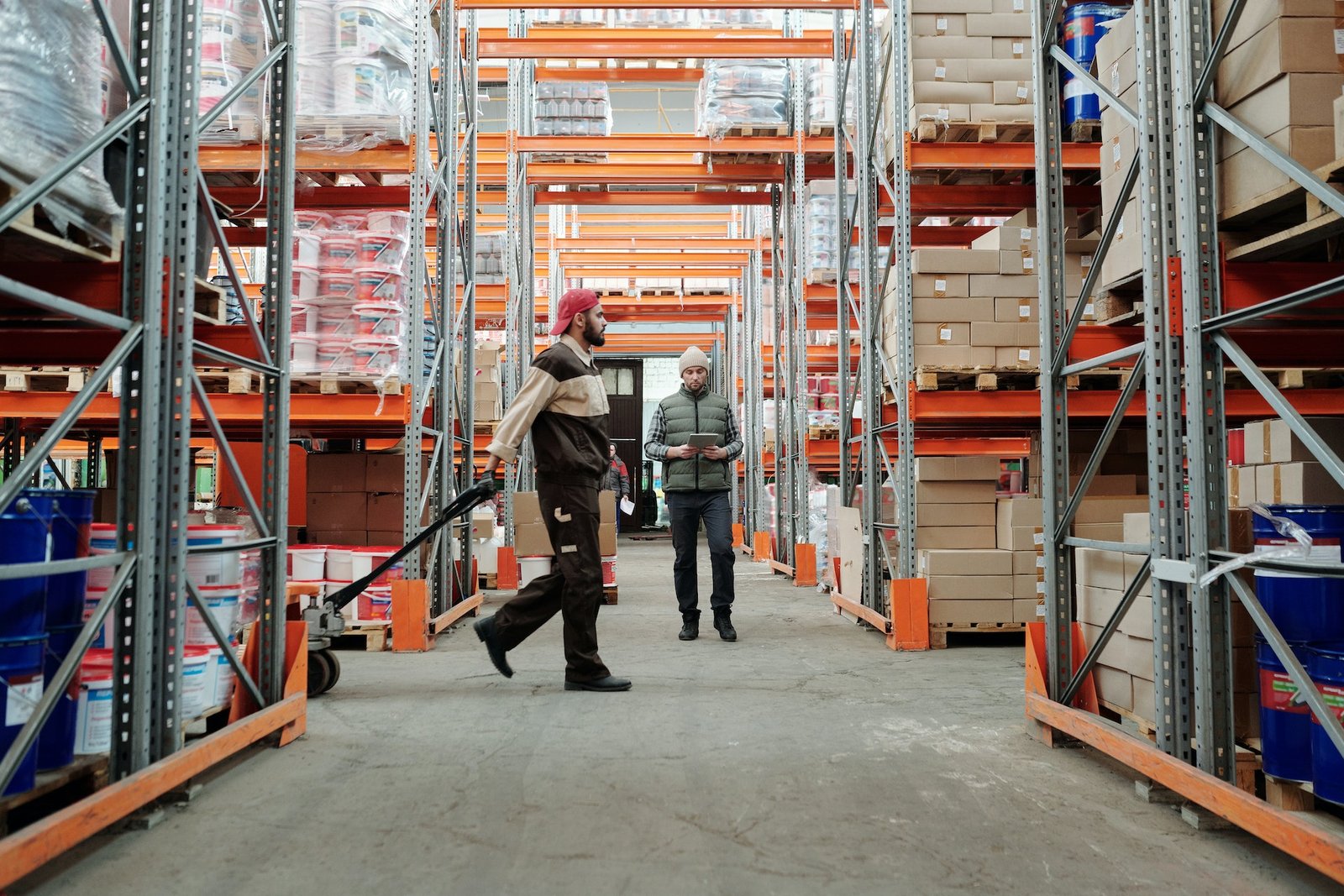
The warehouse industry is undergoing a significant transformation driven by the need for greater efficiency, accuracy, and responsiveness to market demands. Various types of warehouses, including retail storage, cold storage, and distribution centers, are increasingly leveraging advanced technologies to optimize operations, reduce costs, and enhance customer satisfaction. This shift is realized by the integration of IoT devices, automation, and data analytics, which together enable real-time visibility and streamlined processes. However, transitioning to a smart warehouse environment presents unique challenges. QLink Super WiFi™ solutions provides a comprehensive approach to address these challenges and support digital transformation within the warehouse industry.
Warehouses often have a high density of metal racks and shelving that obstruct wireless signals, complicating the design of effective connectivity solutions. Wireless networks must be strategically planned to ensure coverage throughout the facility, optimizing coverage while mitigating self-interference.
There is a huge amount of devices enabled for operations in smart warehouses. Network design must accommodate different types of devices to ensure sufficient bandwidth and minimize latency. The applications include:
AGVs, AMRs and robotic applications operate in time-sensitive environments, where any packet loss or delay can halt operations and potentially lead to mechanical collisions. Therefore, the network must be designed to enable seamless roaming and ensure ultra-low latency for communication between AGVs/AMRs and the backend management system.
Any disruption in wireless connectivity can lead to operational delays and errors in inventory management. As such, the network must incorporate redundancy and failover capabilities to ensure continuous 24/7 operation without downtime. Solutions should include multiple APs to provide seamless coverage.
When selecting network equipment, it is essential to consider the following extreme environmental conditions:

Thanks to the patented antenna design and signal processing algorithms, QLink’s solutions effectively overcome Wi-Fi bottlenecks and enhance uplink performance in non-line-of-sight (NLOS) environments.

QLink’s smart roaming technology ensures fast handover times of less than 100 milliseconds, facilitating smooth and uninterrupted operations as AGVs and AMRs transition between APs without latency.

Designed for 24/7 operation, QLink Solutions provides coverage redundancy and wireless link failover capabilities for business-critical applications, guaranteeing continuous connectivity and minimizing disruptions.
Automated Guided Vehicles (AGVs) and Autonomous Mobile Robots (AMRs) are robotic systems that efficiently navigate warehouses and logistics centers to transport large quantities of goods. These vehicles vary in size and capability, from compact, cost-effective transporters for small goods weighing a few kilograms to larger systems like forklifts capable of handling tens of tons of bulk materials.
The reliability of these systems is crucial to overall operations, as any failure can lead to significant disruptions. The wireless network must be designed to ensure seamless communication between AGVs/AMRs and the Warehouse Management System (WMS) for successful order fulfillment, effective workload management, and maintaining safety within the facility.
An Automated Storage and Retrieval System (AS/RS) is a highly efficient warehouse automation solution designed to automatically store and retrieve products or materials. It maximizes storage capacity by utilizing vertical space, with facilities typically reaching heights of up to 40 meters (131 feet). To streamline loading and unloading operations at these heights, AS/RS usually comprises high-bay racks, stacker cranes, shuttles, and conveyors. Shuttles can move at speeds of 2-4 m/s to transport items between storage locations and retrieval points. All operations are controlled in real-time by a warehouse management system (WMS).
As shuttles navigate through a dense metallic lattice, traditional Wi-Fi connections often struggle, potentially halting shuttle operations. This disruption can trigger a chain reaction affecting other robots as well. Consequently, such incidents significantly reduce warehouse throughput, resulting in profit loss and increased costs due to the need for manual intervention.
Given the complex and densely packed metallic structure, selecting the appropriate AP model and installation locations is crucial. QLink recommends using AP models equipped with directional antennas, strategically positioned high to point down every aisle or every other aisle. This ensures that the signal reaches the deepest parts of the metallic structure. Additionally, installing industrial-grade CPE on every shuttle and stacker crane can enhance link robustness.