DRAG
 DRAG

The energy and utility sector is a fundamental component of national infrastructure, encompassing critical facilities such as electrical power plants and water treatment facilities. For this reason, uptime, reliability, and security are of utmost importance to ensure continuous service delivery to the public. To facilitate effective management and maintain a high Service Level Agreement (SLA), the sector is transitioning from legacy infrastructure to smart networks equipped with IoT sensors and video surveillance. This transformation enhances asset management, improves fault detection and diagnostics, and optimizes maintenance processes, leading to greater operational efficiency.
However, deploying these advanced systems presents challenges, including site complexity caused by diverse environments and the need for reliable connectivity in remote locations. The integration of numerous devices increases the demand for robust network infrastructure capable of sustaining uninterrupted service amidst potential interference and environmental factors. Furthermore, ensuring cybersecurity and data integrity is critical, as vulnerabilities can jeopardize essential services and public safety.
QLink is well-equipped to address these challenges, providing a robust, reliable, and resilient network solution tailored for the energy and utility sector. With its advanced technology, QLink ensures seamless connectivity, enabling real-time data monitoring and management while supporting the sector’s evolution into a smart, efficient infrastructure.
Power plants and water treatment facilities are characterized by a high density of metallic structures and buildings. These environments create non-line-of-sight (NLOS) conditions that impede wireless signal propagation. The presence of large machinery, storage tanks, and various infrastructure components can obstruct signals, leading to weak coverage and unreliable connectivity. Additionally, the industrial setting often includes high ceilings and enclosed spaces, further complicating the installation of access points (APs). As a result, network design must carefully consider these physical barriers to ensure adequate coverage and maintain signal integrity throughout the facility.
In critical infrastructure, any link disconnection can have severe consequences, including service outages and safety risks. The Wi-Fi network must be designed to ensure high availability and minimize downtime, employing redundancy and failover solutions to maintain continuous connectivity for essential operations.
The Wi-Fi network should be designed with high availability, including coverage redundancy and dual backhaul links for fail-safe connectivity.
The ability to transmit real-time data is crucial for effective monitoring and decision-making in the utility sector. Wi-Fi networks must support high-speed data transfer to enable instant access to analytics, which can drive operational efficiency, predictive maintenance, and responsive fault management.
With increasing connectivity comes heightened risk of cyber threats. Wi-Fi networks in the utility and energy sector must implement stringent security measures, including encryption, access controls, and continuous monitoring, to protect sensitive data and ensure the integrity of critical infrastructure.

Thanks to the patented antenna design and signal processing algorithms, QLink’s solution overcomes a Wi-Fi bottleneck and enhances uplink performance in a non-line-of-sight (NLOS) environment. This allows for an optimized number of APs while minimizing self-interference in the power stations and water treatment facilities, resulting in reduced capital and operational expenditures.

The QLink AlwaysConnected feature employs a proprietary redundancy protocol that ensures optimal wireless link performance with failover capabilities for business-critical applications. This guarantees continuous connectivity and minimizes disruptions.

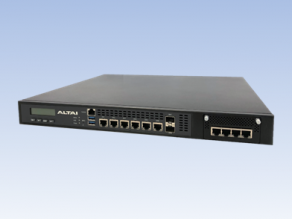
At QLink, security is a top priority. The integration of the Check Point Next Generation Firewall (NGFW) with the QLinkGate 510 network controller delivers comprehensive end-to-end protection against potential cyber threats. This advanced security framework ensures the integrity and confidentiality of data
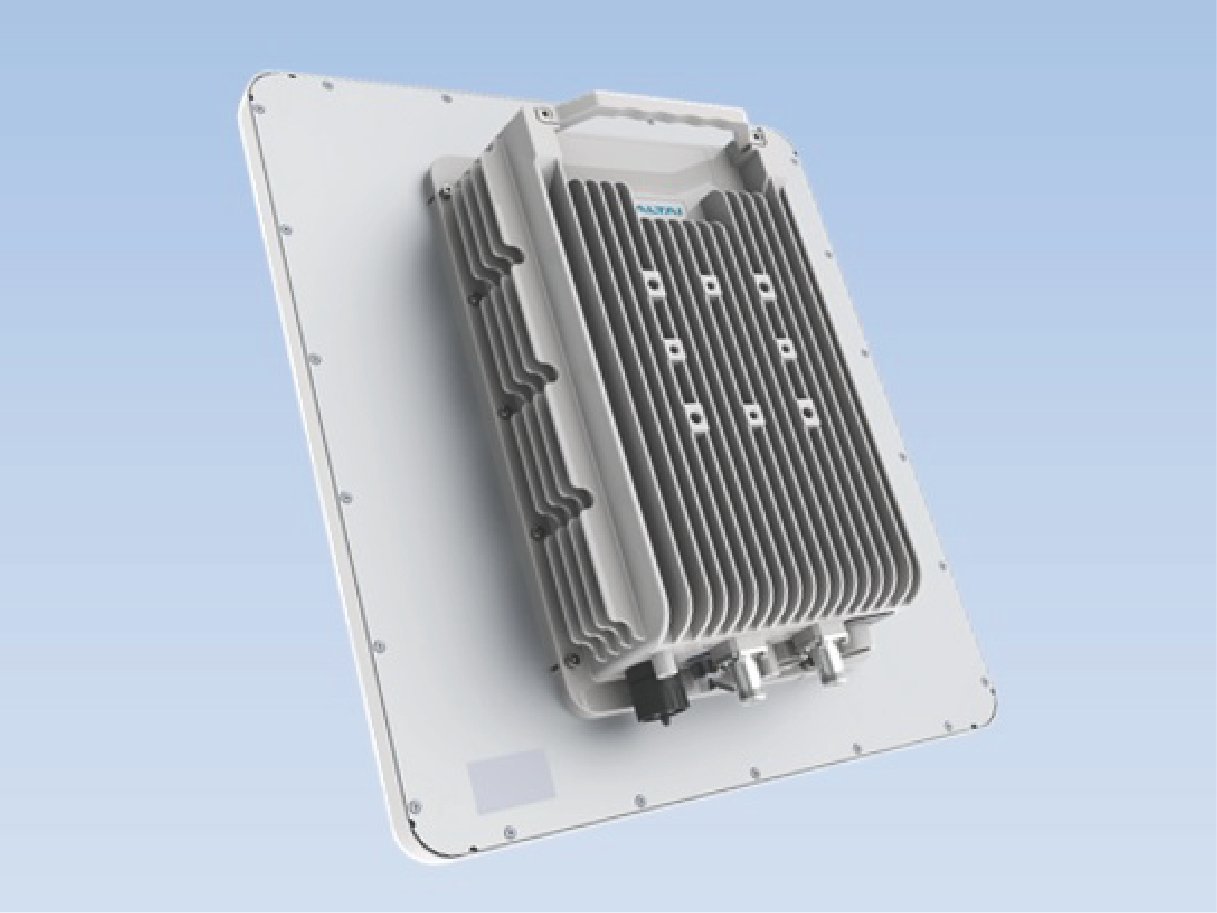
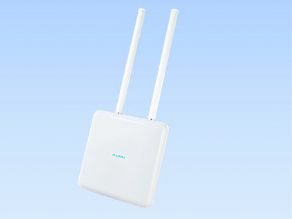
QLink APs are engineered to endure the demanding conditions found in the utility and energy sector. With an IP67 weatherproof rating, high wind survival capabilities, resilience to extreme temperatures, and surge protection, these devices are designed for exceptional durability

The QLink WLAN controller offers comprehensive management and monitoring of the entire WLAN infrastructure, including APs and remote customer premises equipment (CPEs). This centralized management system simplifies network operations, allowing for real-time performance analysis
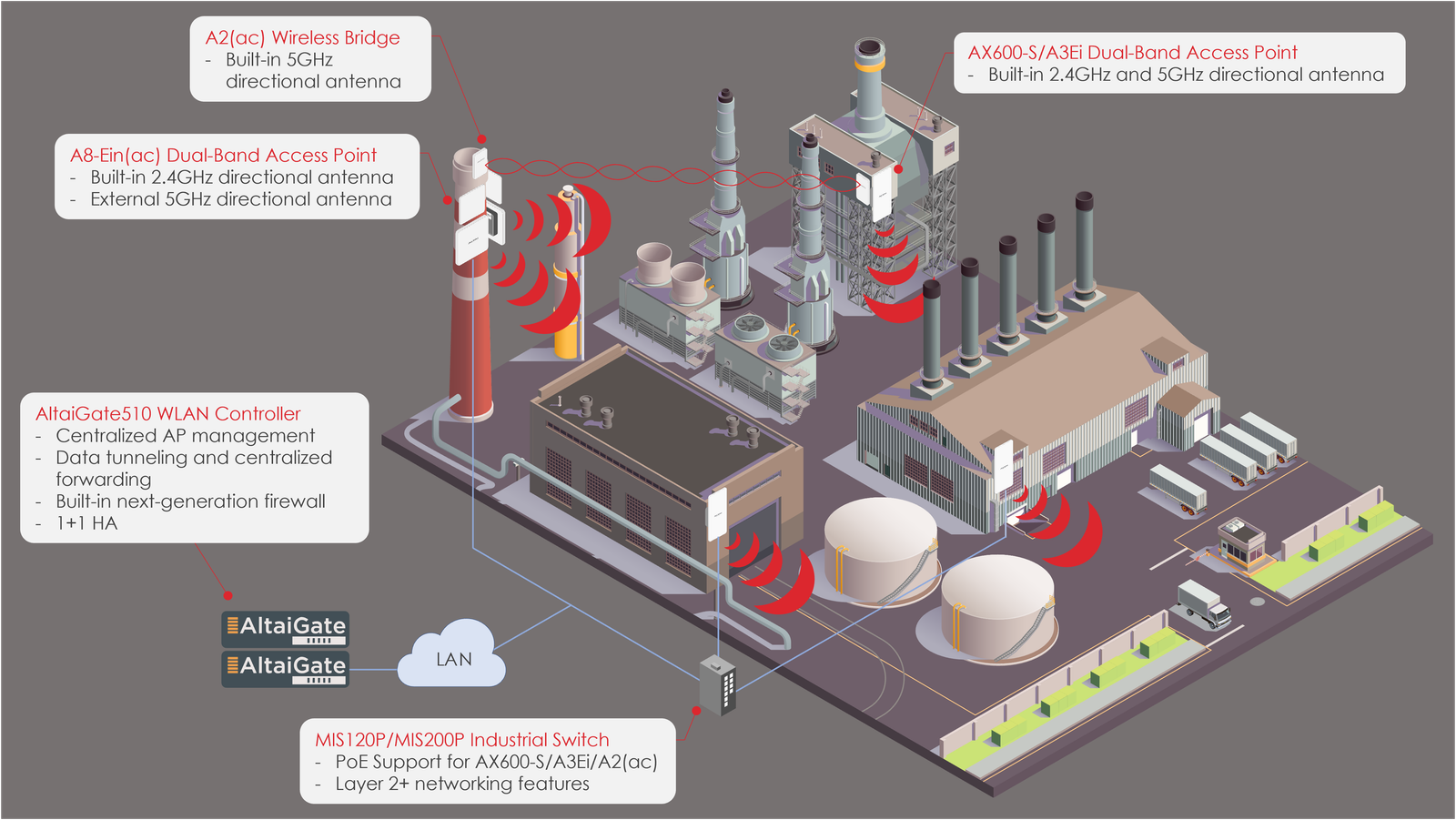
Deploying Wi-Fi in power plants presents significant challenges due to the complex site environments and the restricted locations for access point (AP) installation. Power plants are typically characterized by a dense arrangement of large machinery and structures, such as boiler blocks, cooling towers, and chimneys, which can create non-line-of-sight (NLOS) conditions that hinder wireless signal propagation. Additionally, the availability of fiber backhaul can be limited, restricting where APs can be installed and complicating the overall network design.
To address these challenges, QLink proposes a strategic deployment of AP at elevated locations throughout the power plant. By installing APs on high structures, such as the tops of cooling towers and boiler blocks, we can mitigate signal blockage from the surrounding environment and enhance overall coverage. From these high locations, the network can be extended in a cellular manner, allowing signals to fill coverage gaps and eliminate blind spots at street level. This approach not only ensures robust connectivity across the facility but also facilitates seamless communication for critical operations, monitoring, and maintenance activities, ultimately enhancing the reliability and efficiency of power plant operations.