DRAG
 DRAG


In today’s aviation industry, robust Wi-Fi connectivity is essential for enhancing operational efficiency, particularly in Maintenance, Repair, and Overhaul (MRO) operations. Reliable Wi-Fi coverage is required throughout the airport, including the expansive apron area, hangars, and even inside aircraft. For instance, maintenance personnel in hangars rely on Wi-Fi to upload and download real-time data while inspecting aircraft both externally and internally. In the open apron area, Wi-Fi is crucial for supporting CCTV systems and facilitating data transfer for autonomous vehicles. Additionally, providing Wi-Fi coverage for passengers inside the terminal and aircraft has become an essential expectation. However, deploying effective Wi-Fi solutions in such diverse environments presents various challenges. Qlink Solutions is uniquely positioned to address these challenges, enabling seamless connectivity for a wide range of applications across different areas of the airport.
Wi-Fi must be available across all airport areas—hangars, aprons, terminals, and aircraft interiors. Key challenges include:
The Wi-Fi network must handle high-density usage without interfering with other radio systems. In apron areas, radar systems are operational. The Wi-Fi system must avoid using the DFS channels utilized by these radar systems to ensure uninterrupted aerial operations. It is advisable to conduct a thorough site survey and implement effective channel planning during the network design phase.
The Wi-Fi network should be designed with high availability, including coverage redundancy and dual backhaul links for fail-safe connectivity.
With various types of applications connected to the network, it is critical to safeguard data from malicious attacks. The network should be well protected with the latest industry standards and features, e.g. WPA3 and 802.1X for access control, AES for data encryption, VLANs for network segmentation, and WIPS for intrusion prevention.
The network design must facilitate seamless roaming, allowing ground crew and maintenance personnel to maintain connectivity while moving throughout the airport.

Thanks to the patented antenna design and signal processing algorithms, Qlink’s solutions effectively overcome Wi-Fi bottlenecks and enhance uplink performance in non-line-of-sight (NLOS) environments. This optimization allows for a reduced number of APs while minimizing self-interference, lowering capital and operational expenditures.

The Qlink AlwaysConnected feature employs a proprietary redundancy protocol that ensures optimal wireless link performance with failover capabilities for business-critical applications. This guarantees continuous connectivity and minimizes disruptions.

Qlink APs work collaboratively to distribute traffic load among wireless devices, delivering optimal performance for a wide range of applications. This solution effectively addresses the “sticky client” issue commonly found in traditional Wi-Fi networks, ensuring smooth operations in high-mobility environments.
At Qlink, security is a top priority. The integration of the Check Point Next Generation Firewall (NGFW) with the QlinkGate 510 network controller delivers comprehensive end-to-end protection against potential cyber threats. This advanced security framework ensures the integrity and confidentiality of data, enabling operations to proceed with confidence in an increasingly complex cyber landscape.

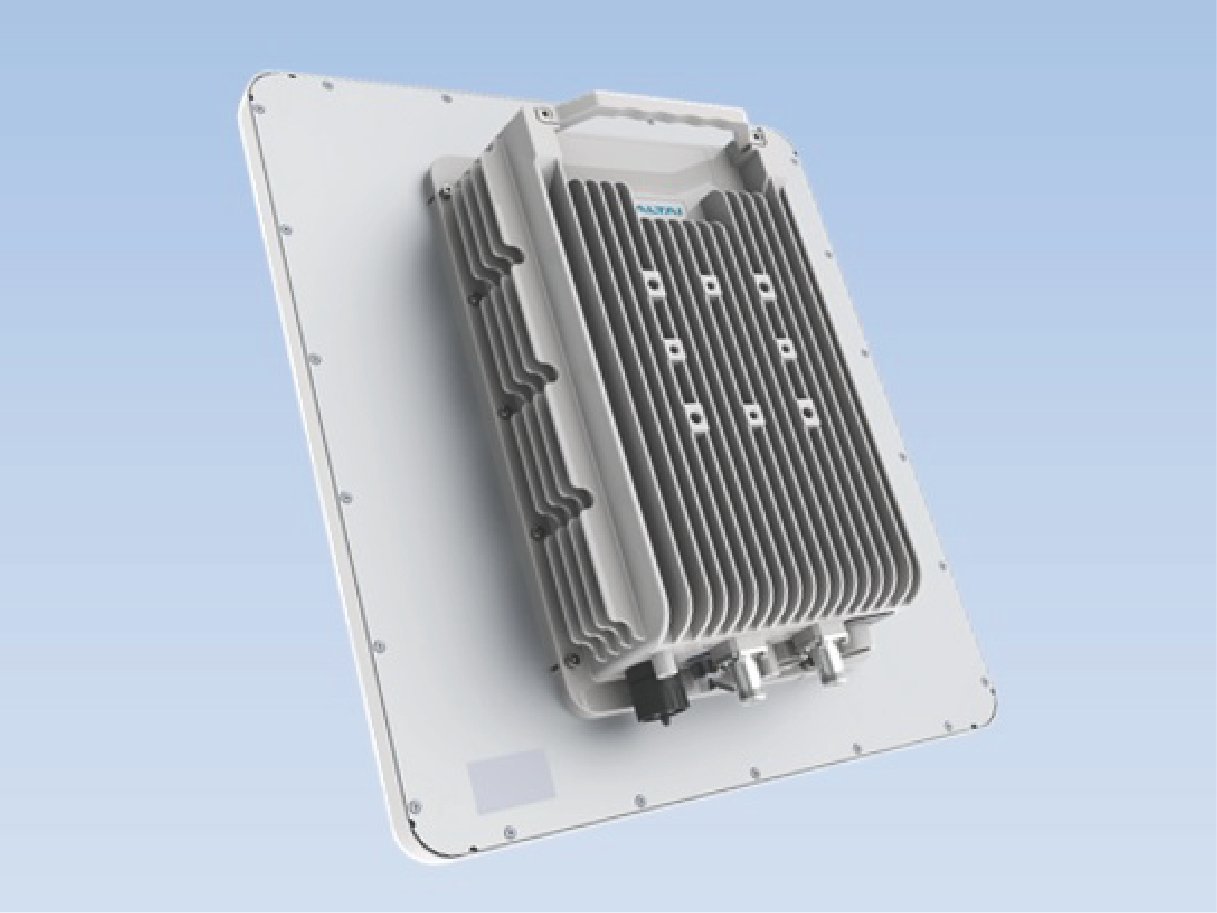
Qlink APs are engineered to withstand demanding outdoor conditions. With an IP67 weatherproof rating, high wind survival capabilities, resilience to extreme temperatures, and surge protection, these devices are designed for robustness, making them ideal for extensive outdoor apron areas.
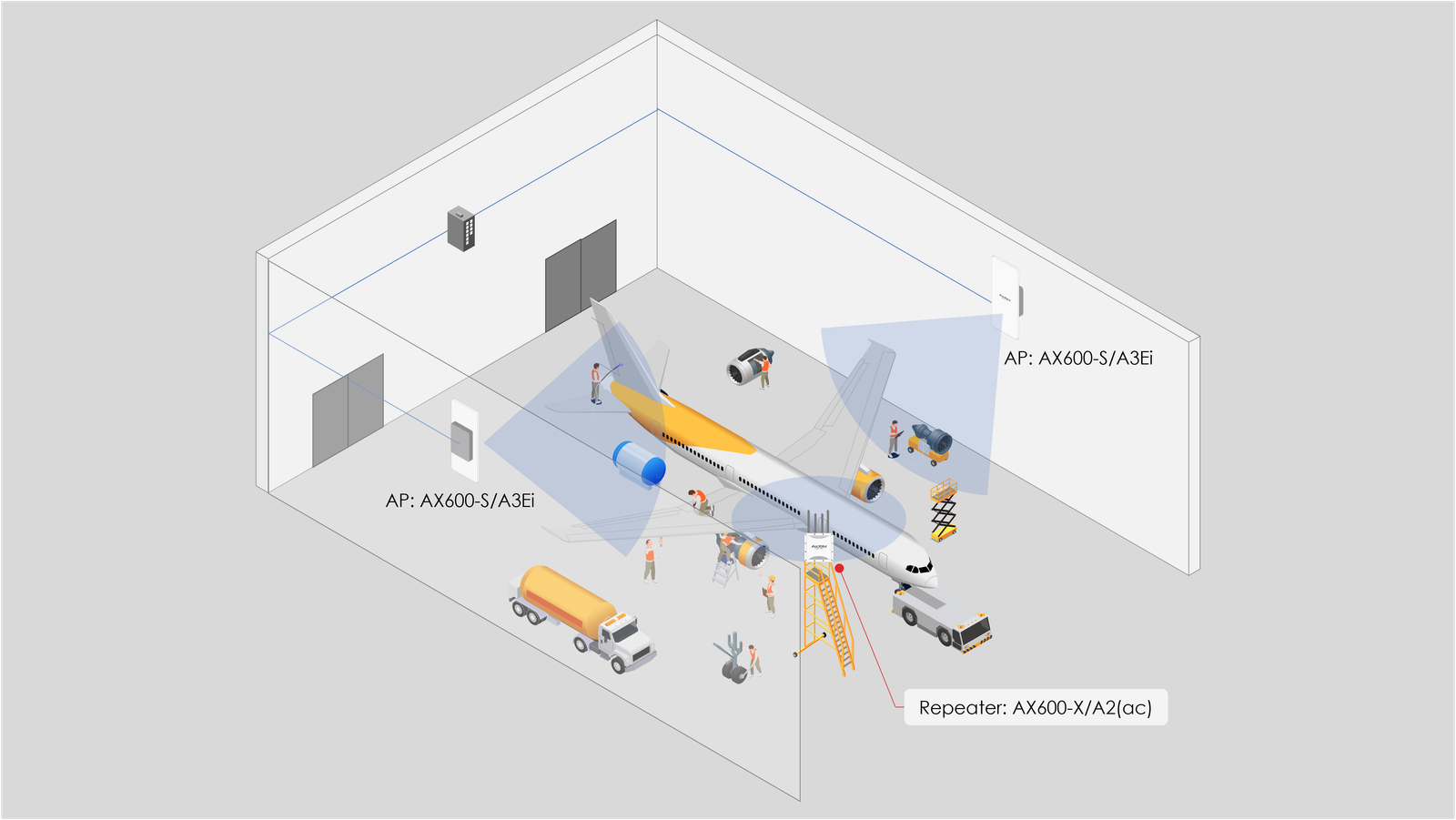
Wi-Fi connectivity is crucial for Maintenance, Repair, and Overhaul (MRO) operations in aircraft hangars, as it enables real-time data access and communication among maintenance personnel. With reliable Wi-Fi, technicians can efficiently upload and download critical information, such as maintenance records and technical manuals, directly on-site. This seamless access to information not only streamlines workflows but also enhances safety and compliance by ensuring that personnel have the most up-to-date data while conducting inspections and repairs.
Deploying Wi-Fi in hangars poses significant challenges, particularly in achieving reliable coverage within aircraft cabins. The metallic structure of aircraft obstructs Wi-Fi signals, complicating connectivity inside the cabin. Additionally, high ceilings and large equipment in hangars limit the placement of access points (APs), resulting in inconsistent signal strength and potential coverage gaps that can hinder MRO operations.
To tackle these challenges, Qlink recommends high-gain directional antenna with strategic AP placements on walls to enhance signal penetration into aircraft cabins through windows and access doors. Furthermore, repeaters can be installed on working platforms beside the aircraft to further increase the chance of extending coverage into the aircraft.
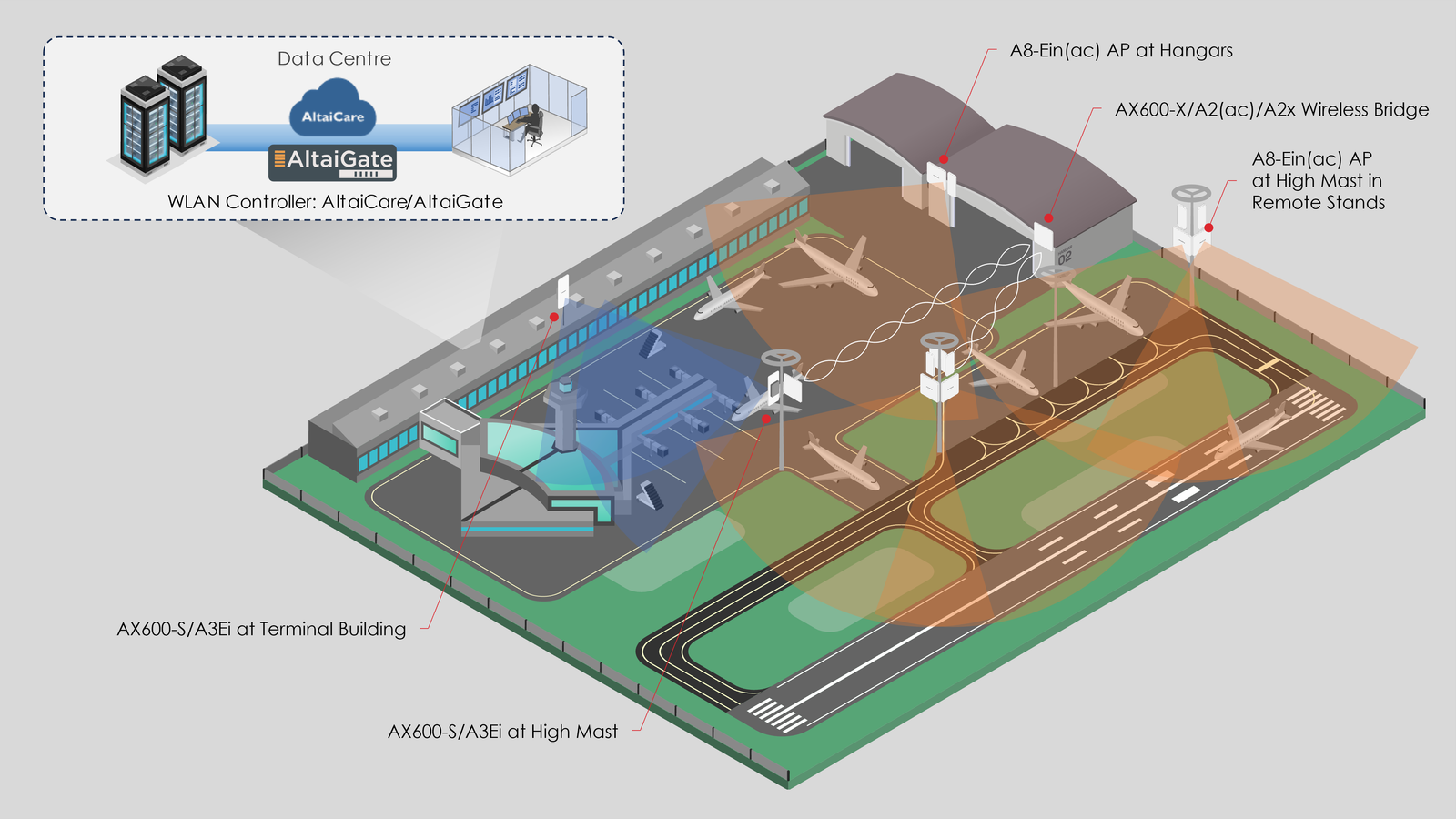
In apron areas, robust Wi-Fi coverage is essential to support a wide range of applications, including IoT sensors that monitor environmental conditions, CCTV cameras for security and surveillance, and autonomous vehicles requiring real-time communication for navigation and coordination.
However, deploying Wi-Fi in these areas presents several challenges, primarily due to the lack of cabling infrastructure and limited locations for access point (AP) installation. The expansive and open nature of apron areas complicates AP placement, as traditional mounting options may not be feasible. Additionally, the large metallic structures of parked aircraft can obstruct Wi-Fi signals, further diminishing coverage.
To address these challenges, Qlink proposes installing APs at elevated locations, such as building rooftops and high masts at remote parking stands, to maximize coverage across the apron. These APs can be connected via a fixed wireless backhaul network, eliminating the need for extensive cabling. This approach establishes a comprehensive Wi-Fi network that facilitates real-time data transfer for IoT devices, surveillance cameras, and autonomous vehicles, ensuring reliable communication and enhancing overall operational efficiency in apron areas.
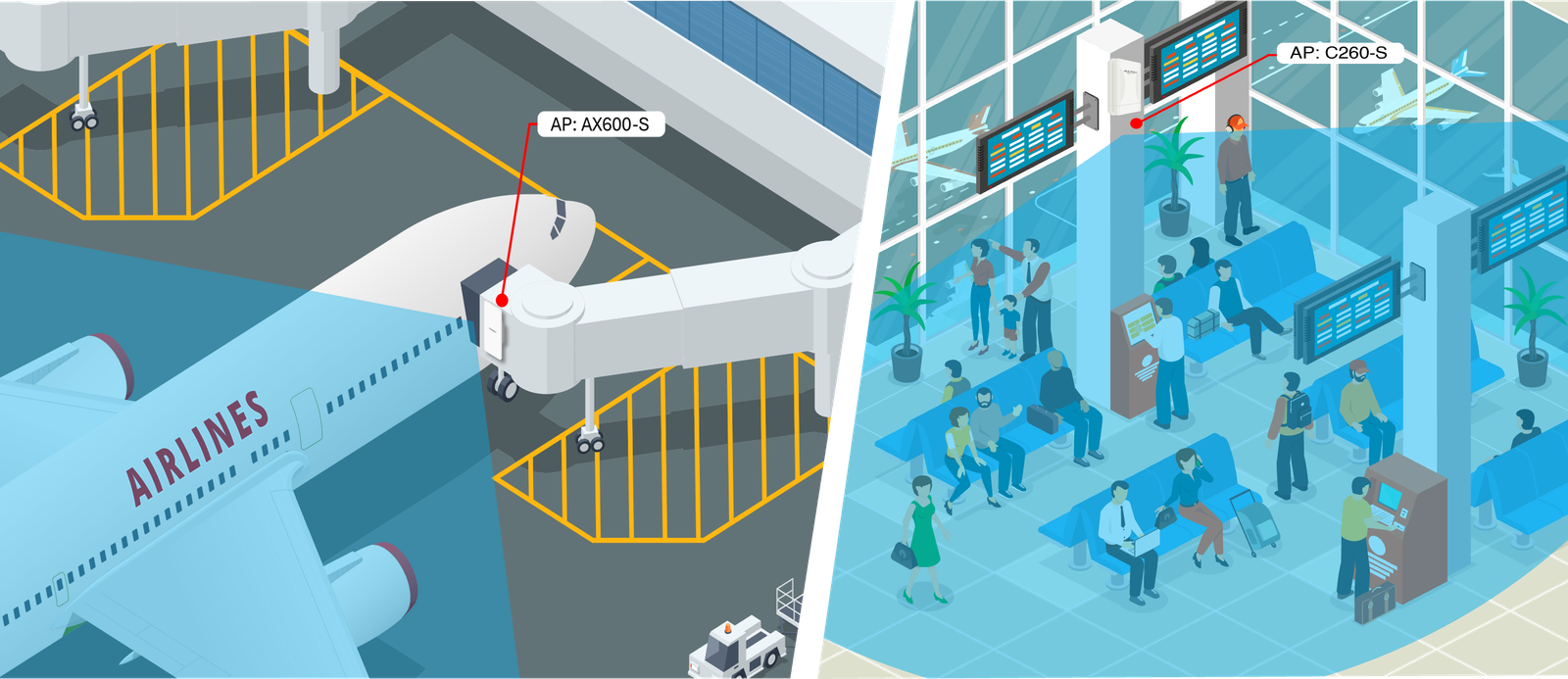
Wi-Fi is essential for enhancing travellers’ experience. Passengers rely on it for real-time flight status updates, remote work, and socializing with friends. Additionally Online surveys enable them to provide feedback or report issues to airport management, facilitating prompt responses and continuous service improvements.
However, providing Wi-Fi in terminal buildings presents challenges due to high user capacity and elevated ceiling heights. Inside the aircraft, obtaining reliable Wi-Fi connectivity in the cabin can also be difficult due to the metallic structure of the fuselage.
To address these challenges, Qlink proposes the use of high-gain directional antennas for both terminal and cabin coverage. These antennas can be installed on walls to effectively cover the area, meeting the high user capacity requirement while minimizing interference. For cabin coverage, APs can be strategically placed on the exterior walls of boarding bridges, allowing the Wi-Fi signal to penetrate the aircraft through the windows, ensuring seamless connectivity for passengers.