DRAG
 DRAG


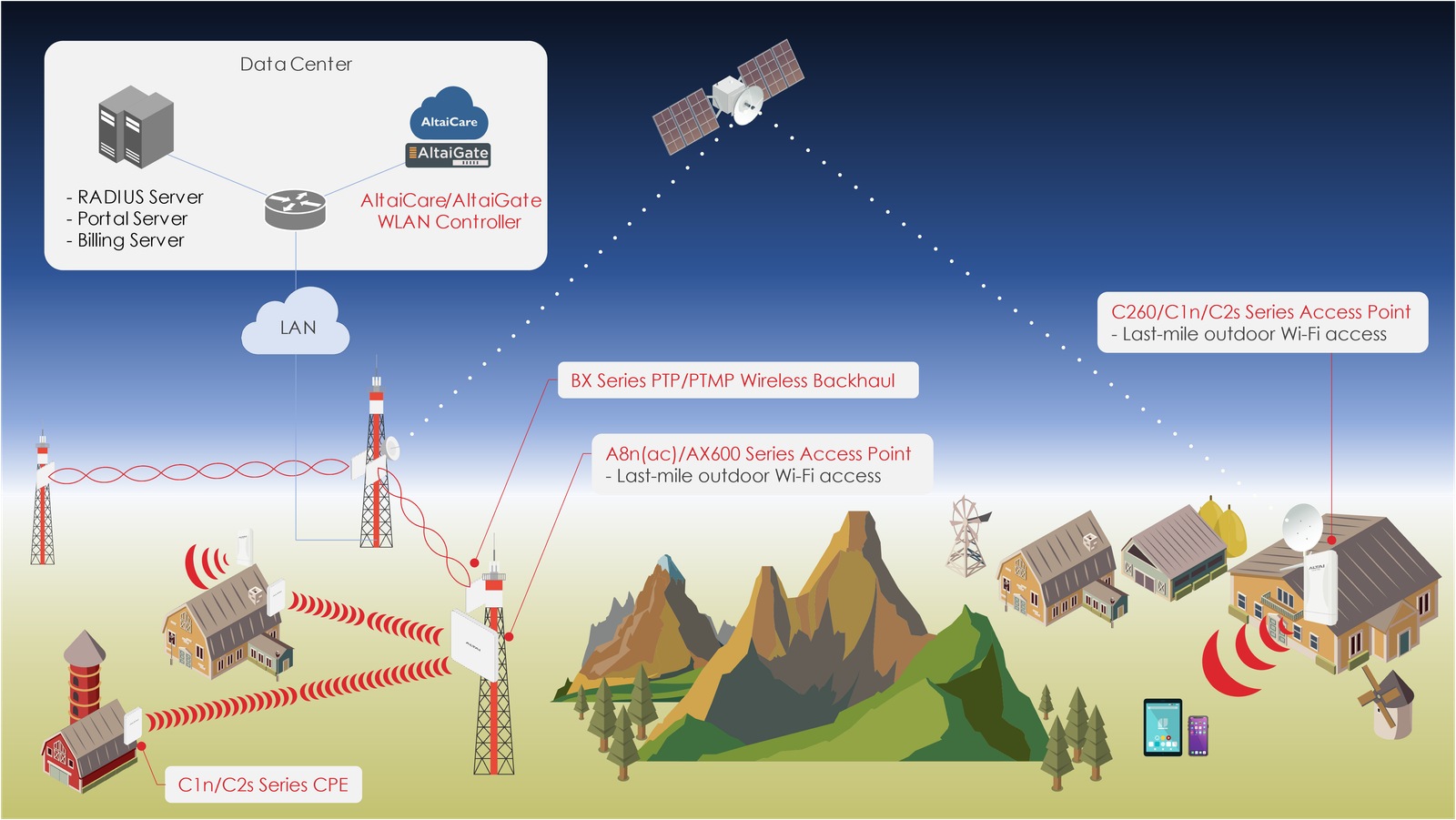
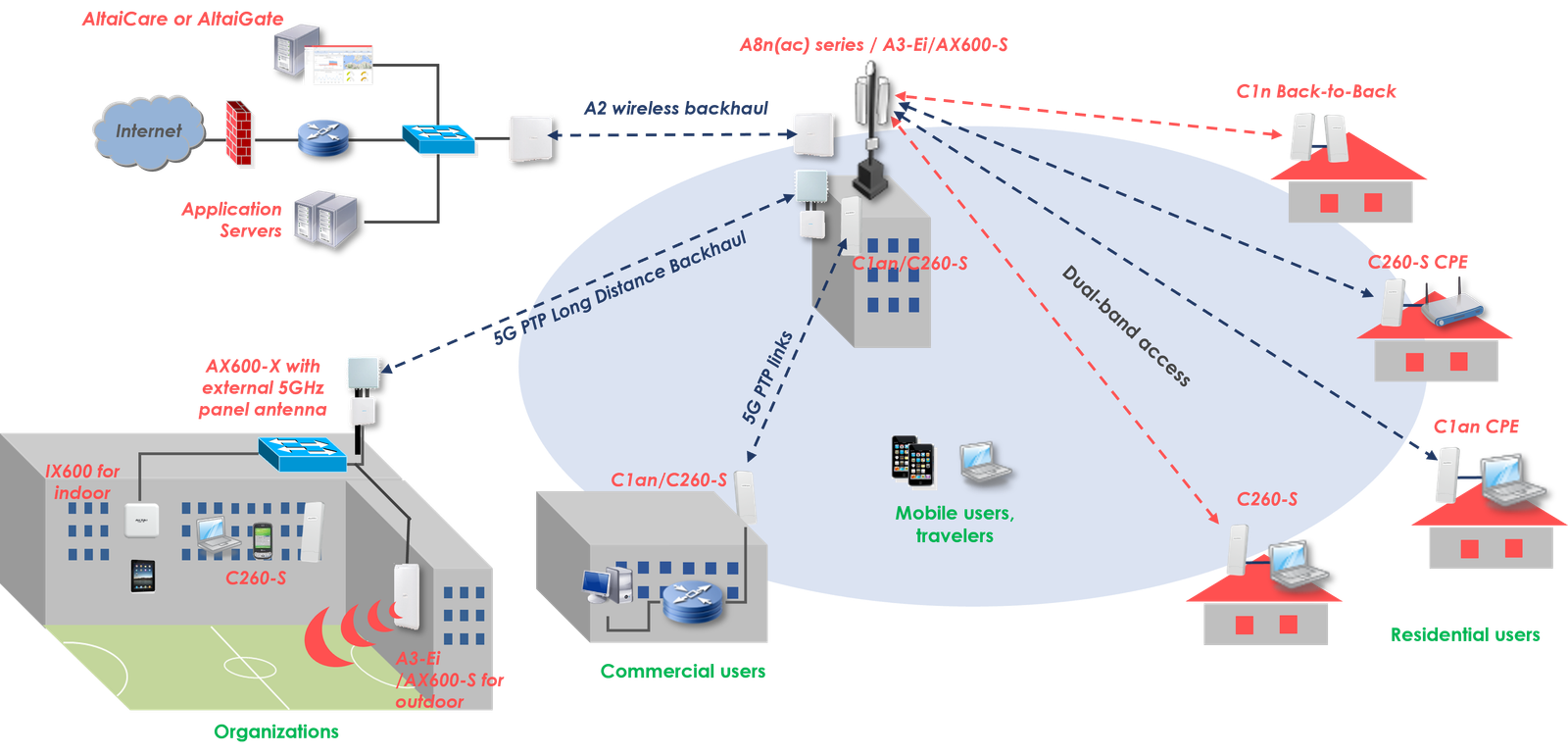
An Internet service provider utilizing a wireless networking infrastructure focuses on last-mile data delivery, which can often present significant challenges due to the need for individual cable connections to each subscriber. By delivering Internet services through RF communications from central transmitters, the provider ensures consistency and reliability in service. It is essential to offer wide coverage to accommodate a large number of users while maintaining affordability and cost-effectiveness without compromising the quality of service.
Wi-Fi facilitates internet access for users in rural area/community, providing a lot of convenience in:
Establish the free Wi-Fi to targeted customers through captive portal registration where the WISP can promote their own services, create awareness and get advertisement revenue.
Establish the affordable Wi-Fi service to target customers through prepaid card/postpaid subscription where the WISP can build up the business quickly.
Allow existing ISP users at home or office to enjoy Wi-Fi service in the city areas.
Providing the wireless access in the public areas such as parks, scenic spots, marketing and squares.
Connecting the facilities such as cameras, traffic lights, advertising board and so on.

For rural area, it is expensive to built up tower/pole for Wi-Fi installation. For city area, it is expensive and difficult to built up a new site for Wi-Fi installation.

Interferences come from the AP of office buildings nearby and the other WISP, leads to poor signal reception and low transmission data throughput, causing a lot of delay.

Due to various of authentication methods required for WISP applications, integration with third-party captive portal and authentication server causes additional deployment time and development effort.